Why Kithara

The company is named for an instrument

κιθάρα · cithara · guitar

In 2026 SoulTech Solutions became Kithara. Same company, same engineer, a name with more of my life in it.

The kithara was the concert instrument of ancient Greece. Amateurs learned the lyra, a small lyre built on a tortoise shell. The kithara belonged to professionals: kitharodes, who sang to their own playing, toured, and competed for some of the richest prizes of their world.

Its name is also the root of the word guitar, the instrument I’ve played professionally for most of my life. A working musician’s instrument, for a working engineer’s company.

Spec · Kitharac. 7th c. BC
YOKEARM7 STRINGSSOUNDBOX
Strings
Seven, by tradition from Terpander on
Body
Heavy wooden soundbox, hollow arms, crossbar
Technique
Played standing; plectrum in the right hand, left hand plucks and damps
Players
Kitharodes: professional singer-performers
Lineage of a word
  1. κιθάραGreek
  2. citharaLatin
  3. qīthāraArabic
  4. guitarraSpanish
  5. guitarEnglish

Same root, other branches: zither, and the medieval cittern and gittern.

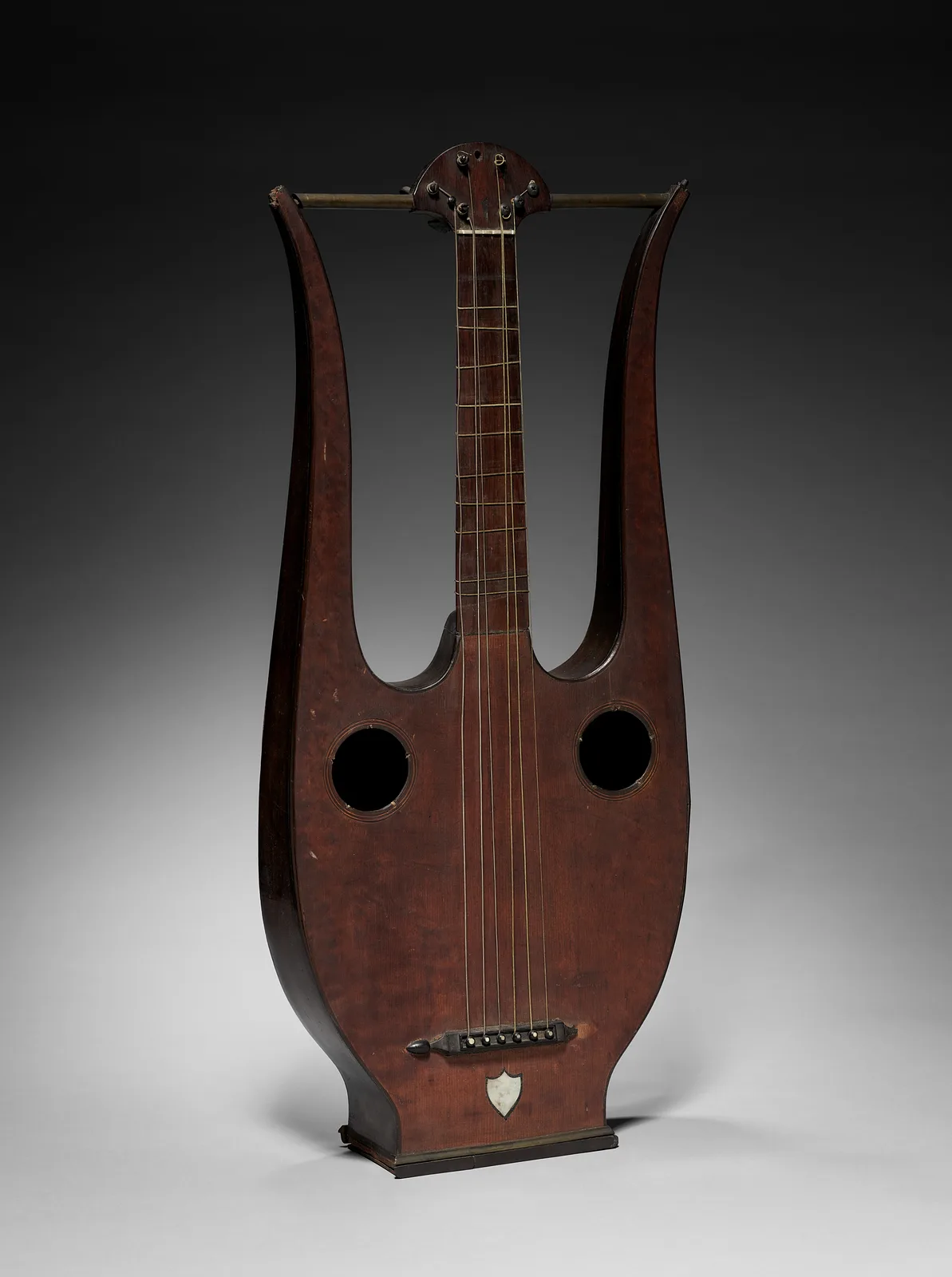
An honest footnote: the guitar inherited the name, not the body. Its shape comes from the lute family. A few makers later tried to give it the body back: the lyre-guitar puts kithara arms on a guitar.

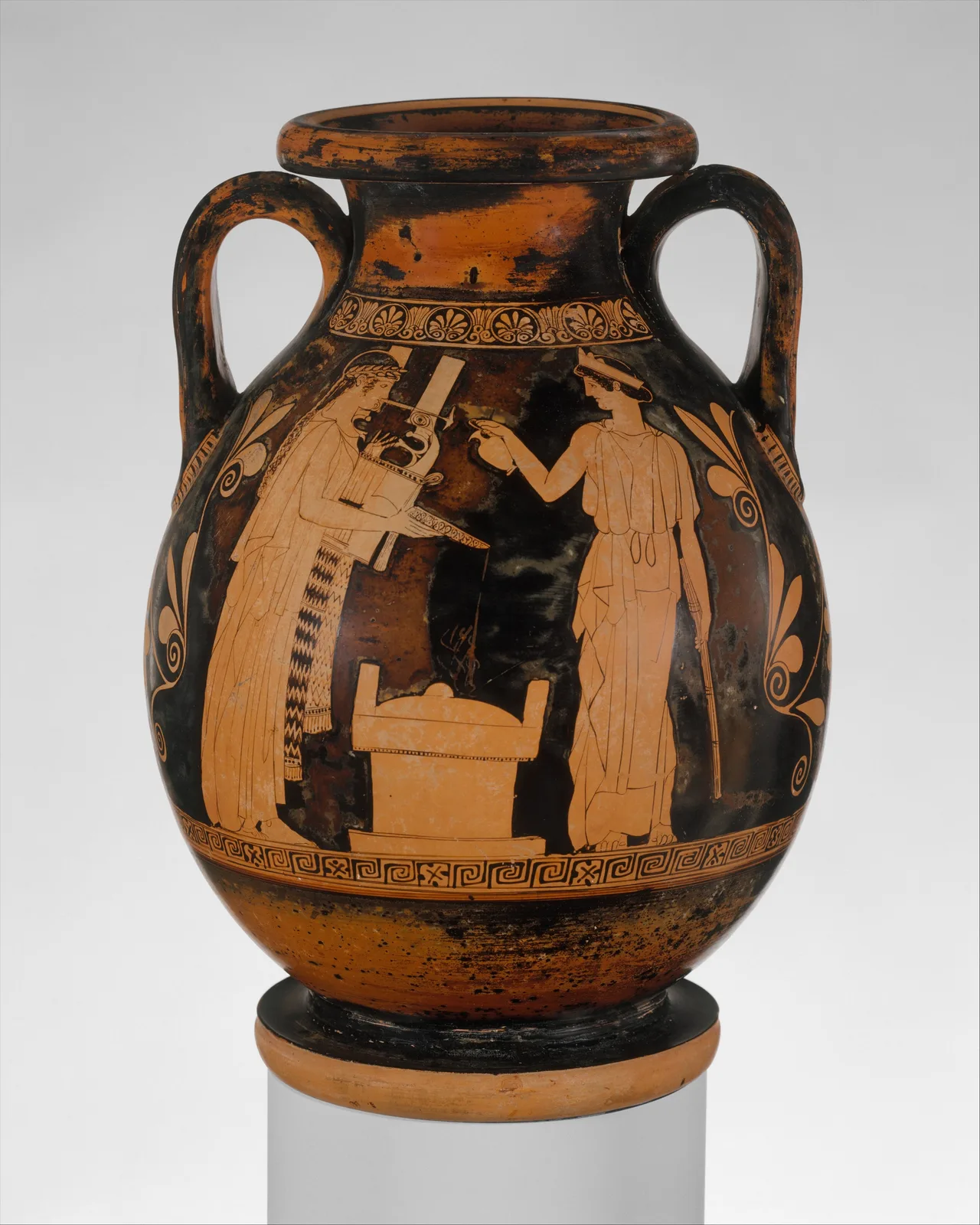
Red-figure jar: Apollo holding a kithara faces Artemis
κιθάρα · Apollo with kithara, red-figure pelike. The Met, Rogers Fund, 1906 (06.1021.191)
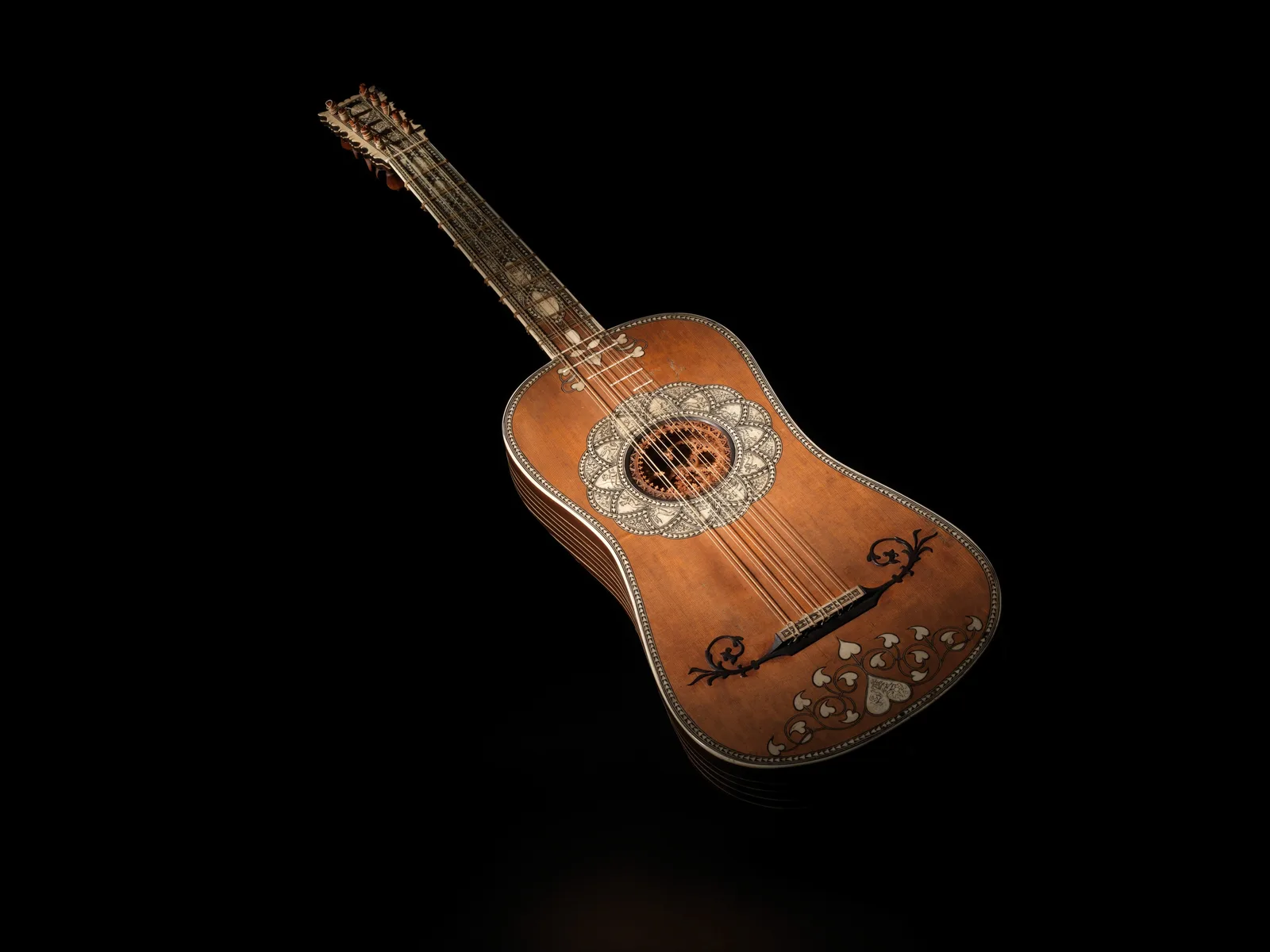
Baroque guitar with an inlaid body and rose, on black
guitar · Guitar attributed to Matteo Sellas, Venice, c. 1630–50. The Met, 1990.103
Lyre-guitar: a guitar neck and strings set between two curved lyre arms
both · Lyre-guitar, Italy, late 1600s. Cleveland Museum of Art, Gift of Ralph King, 1918.379
Release history · 676 BC – 400 BC

A changelog written in strings

The kithara’s string count changed slowly, and never without an argument. Sparta, it turns out, ran change control.

v7c. 676 BC
Terpander of Lesbos

Ships the seven-string standard

Tradition credits Terpander with fixing the kithara at seven strings, and with winning the first music contest at Sparta’s Carneia festival.

A later story says an oracle sent him to Sparta when the city was tearing itself apart in a civil feud, and that his music ended it. True or not, Sparta treated his seven strings as the spec for the next two centuries.

Source: Plutarch, On Music; the Parian Marble
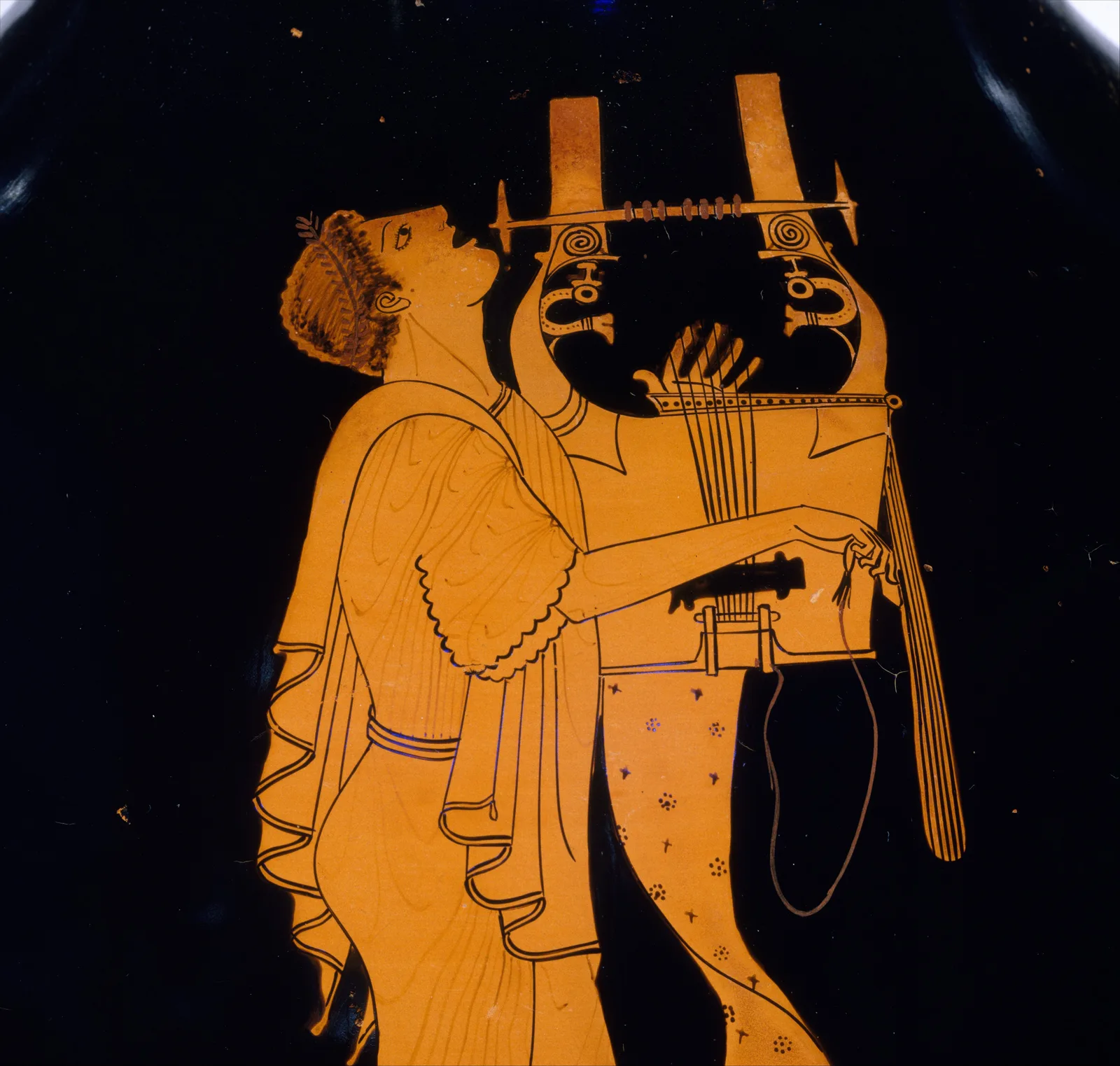
A young kitharode in a long robe, head thrown back in song, playing a seven-string kithara; red-figure on black
Kitharode, amphora attributed to the Berlin Painter, c. 490 BC. The Metropolitan Museum of Art, Fletcher Fund, 1956 (56.171.38)
v9c. 445 BCReverted → v7
Phrynis of Mytilene

The Spartan who cut the strings

Phrynis was the virtuoso of the 5th century BC. Around 445 BC he won the first music contest Pericles added to the Panathenaic festival in Athens, playing a nine-string kithara in a newer, looser style that traditionalists couldn’t stand.

Then he played Sparta. The magistrate Ecprepes heard him, took a blade to the instrument, and cut two of the nine strings. He did give Phrynis one choice: lose the top two, or the bottom two.

Ancient extended-range players were warned.

Source: Plutarch, Life of Agis 10
9 STRINGS IN2 OUT7 LEFT · SPARTA-COMPLIANT
No image of Phrynis survives. A drawing does the job.
v11c. 400 BC
Timotheus of Miletus

“Away with the old Muse”

Phrynis’s student went further: eleven strings by most accounts, and music wild enough to scandalize his elders. A surviving fragment of his verse reads like every engineer who ever rewrote legacy code: I don’t sing the old songs, my new ones are better.

A later tradition says Sparta formally censured him for adding strings and corrupting the youth. That decree is almost certainly invented. People quote it anyway.

Source: Timotheus, fr. 796 PMG; the “Spartan decree” preserved by Boethius
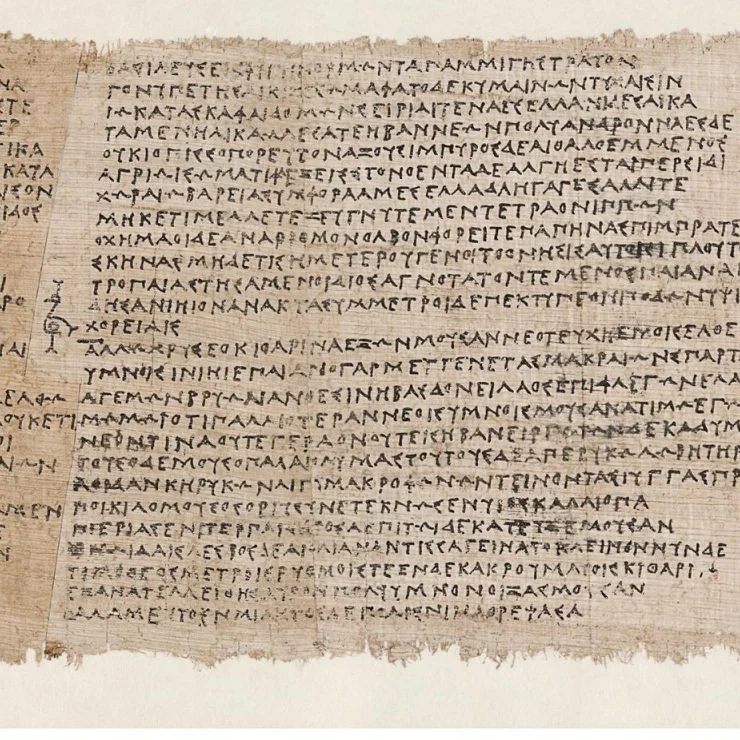
Close-up of a papyrus column of Greek capitals, with a bird-shaped mark in the left margin
Detail: the bird-shaped mark opens Timotheus’s sign-off, where he answers his Spartan critics. Near the bottom he names himself and his eleven-stroke kithara.
A long horizontal strip of papyrus with columns of Greek text: Timotheus’s Persians
Timotheus, Persians. Papyrus, 4th c. BC, the oldest surviving Greek literary papyrus. Staatliche Museen zu Berlin, P. 9875. Photo: Sandra Steiß, CC BY-SA 4.0
Two from the road
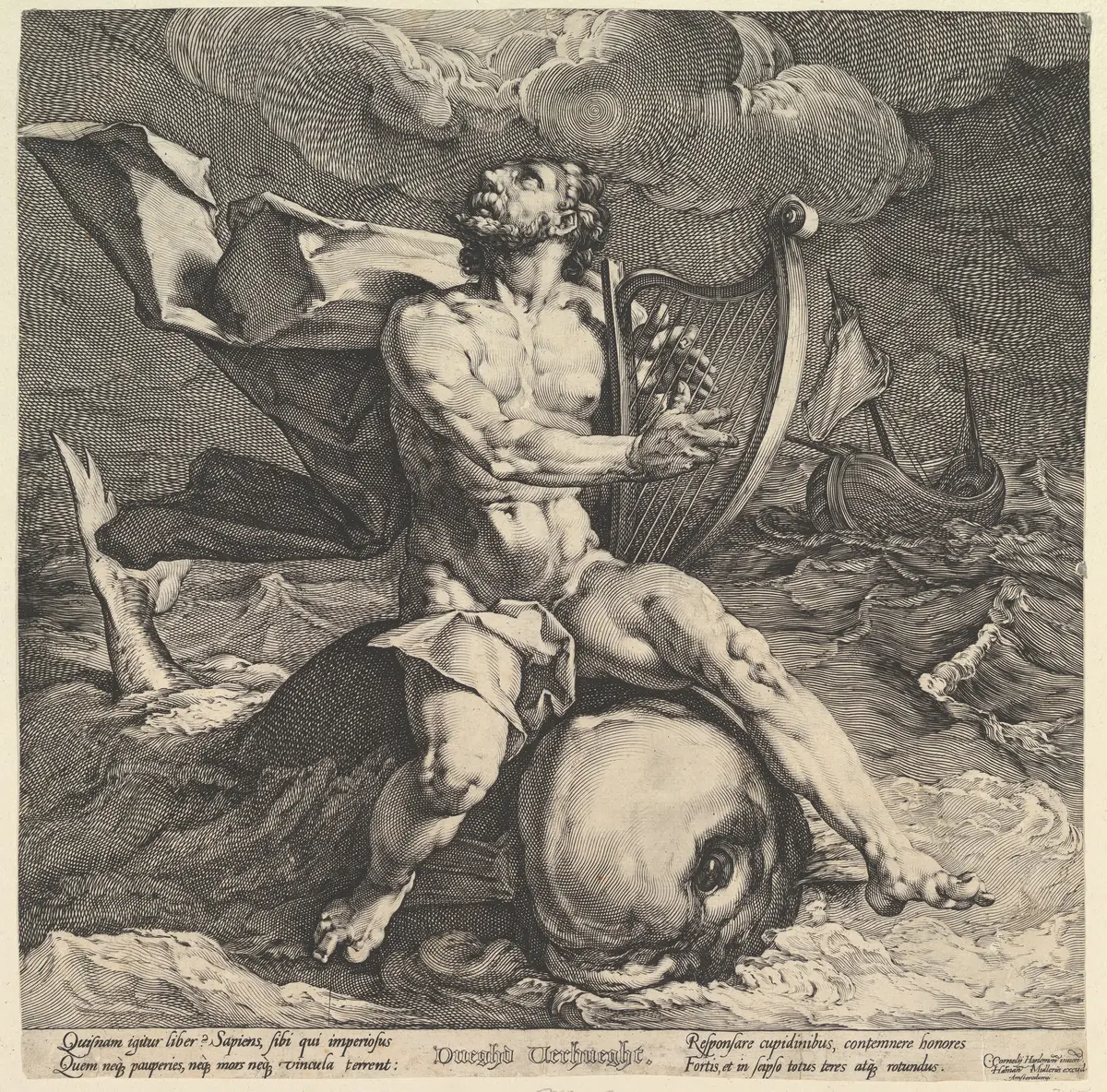
Engraving: a muscular Arion with his lyre rides a dolphin through rough sea
Arion of Methymnac. 600 BC

One last set

Arion was the most famous kitharode of his day, the star of Periander’s court at Corinth. He toured Italy and Sicily, came home rich, and somewhere at sea the crew decided to kill him for the money.

He asked for one last performance. He put on his full stage costume, stood on the stern, sang a high hymn to Apollo, and jumped. In Herodotus’s telling a dolphin carried him to shore. When the sailors reached Corinth claiming Arion had stayed behind in Italy, Periander brought them face to face with him.

Source: Herodotus, Histories 1.23–24
Image: Jan Muller after Cornelis van Haarlem, Arion on a Dolphin, c. 1599. The Met, Elisha Whittelsey Fund, 1956
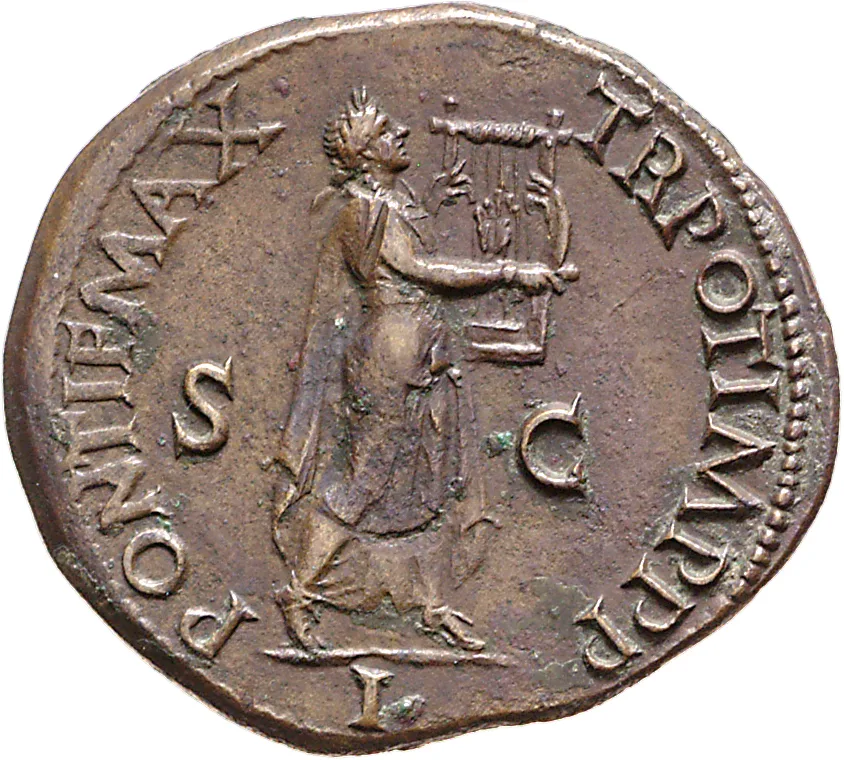
Bronze coin of Nero: a robed figure playing the kithara, with the letters S and C either side
NeroAD 66–67

Root access, no reviewers

Nero trained seriously as a kitharode. He did vocal exercises lying on his back with a lead plate on his chest, and in AD 66–67 he toured Greece, entering every great festival.

Suetonius says nobody could leave the theater while the emperor sang: women gave birth in their seats, and men faked their own deaths to be carried out. Cassius Dio counts 1,808 victory crowns. The lesson keeps: too much power and no honest critics will get you a perfect record you can’t trust.

Source: Suetonius, Nero 20–25; Cassius Dio, Roman History 63
Image: Bronze as of Nero, Lugdunum, c. AD 64, Apollo with kithara on the reverse. Münzkabinett, Staatliche Museen zu Berlin, 18225211. Photo: Dirk Sonnenwald
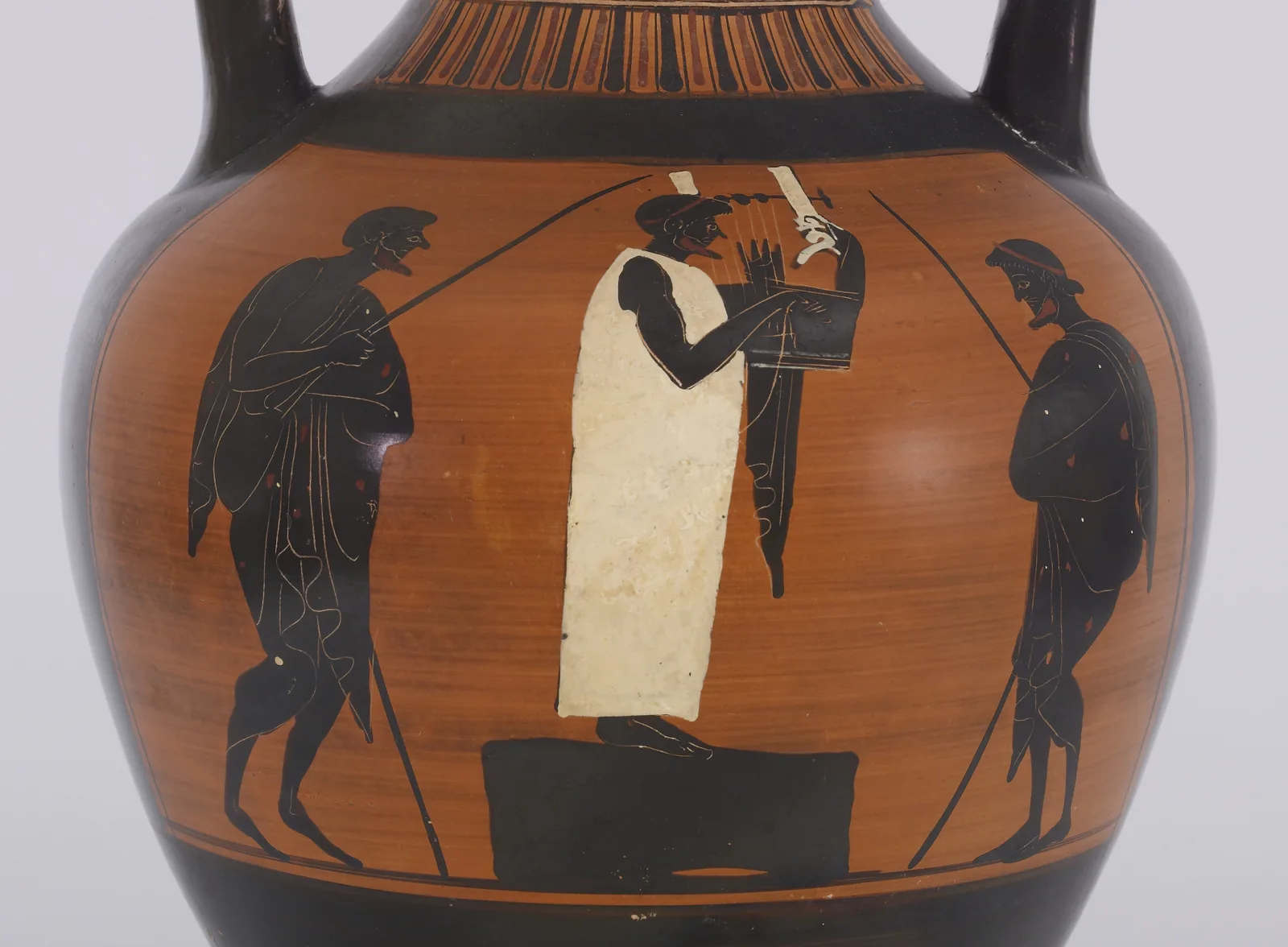
Black-figure amphora: a kitharode in a white robe stands on a podium between two judges1,000 dr.

The gold crown for first prize in kithara-singing at the Panathenaia, when a drachma was about a day’s pay for a skilled craftsman.

IG II² 2311 · Image: Walters Art Museum, 48.2107, CC0
586 BC

Before that year Delphi’s Pythian Games had no athletics. The oldest contest was a hymn to Apollo, sung to the kithara.

Pausanias 10.7
κιθάρα

In the Greek Bible, the harp David played to calm King Saul is a kithara.

1 Samuel 16:23, Septuagint